
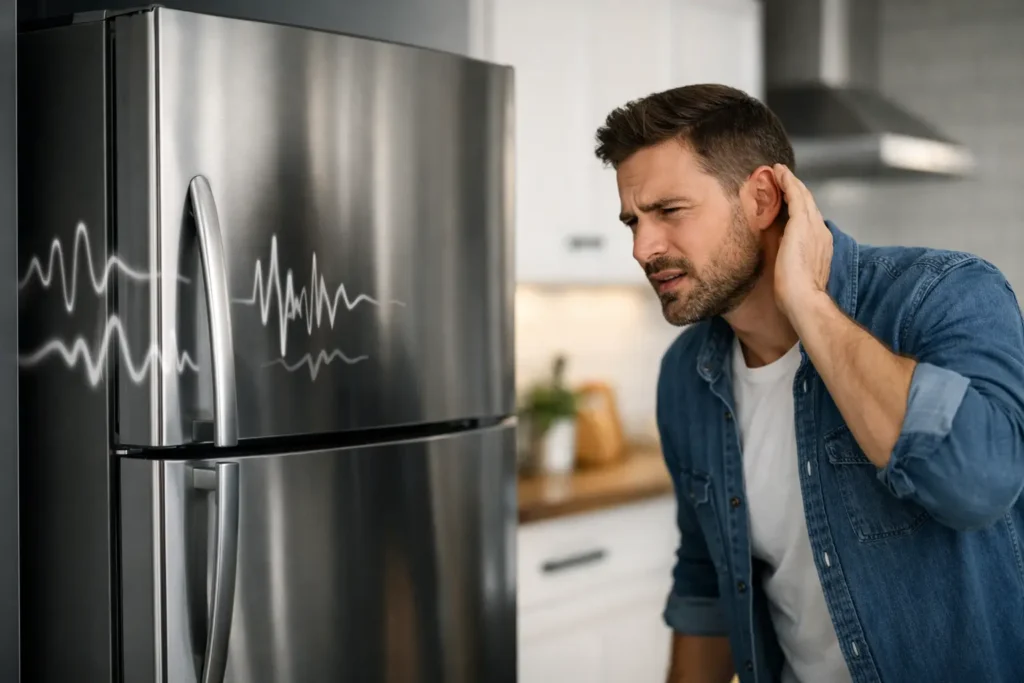
A refrigerator making loud noise can turn a normal kitchen into a stressful place, especially when you are not sure whether the sound is harmless or a warning that cooling may fail. Some refrigerator noises are part of normal operation. Others point to a loose component, a worn fan motor, ice buildup, or a compressor problem that needs professional attention.
The useful question is not simply, “Is my refrigerator loud?” It is, “What kind of noise is it making, where is it coming from, and is the refrigerator still holding a safe temperature?” Those details help narrow down the cause and help avoid replacing food after an unexpected breakdown.
When a Refrigerator Making Loud Noise Is Normal
Modern refrigerators cycle through several components during the day. You may hear a gentle hum from the compressor, a brief click as the unit starts or stops, water moving through the lines, or a short buzzing sound when the ice maker fills. These sounds should be occasional and relatively quiet.
A refrigerator can also make popping or cracking sounds as plastic liners and internal parts expand and contract with temperature changes. This is particularly common after a defrost cycle or when the door has been open for a while. If the sound is brief, the refrigerator is cooling properly, and there is no frost buildup or water leaking inside, it may not require a repair.
What is not normal is a new sound that is persistent, unusually loud, metallic, or paired with poor cooling. A refrigerator should not rattle across the floor, squeal continuously, grind, or produce a heavy knocking noise every time it runs.
Common Loud Refrigerator Noises and Their Causes
Rattling or vibrating
A rattle is often one of the simpler problems to check. The refrigerator may be touching the wall, a cabinet, or a water line behind it. It may also be slightly unlevel, allowing the cabinet or drain pan to vibrate when the compressor runs.
Pull the refrigerator forward carefully and make sure there is clearance around the sides and back. Check that containers on top of the refrigerator are not vibrating. If accessible, confirm the rear cardboard or metal cover is secure. A loose drain pan underneath can also create a noticeable rattle.
If the refrigerator is stable and clear of surrounding surfaces but still rattles loudly, the source may be a compressor mount, condenser fan, or another internal component. That is a good point to arrange a diagnosis rather than continuing to run the appliance without knowing the cause.
Buzzing or humming louder than usual
A low hum is expected while the compressor is operating. A loud buzz that starts and stops may be caused by the ice maker, water inlet valve, or compressor system.
If the noise occurs when the ice maker is trying to fill but the refrigerator has no water supply connected, turn the ice maker off. An ice maker that is switched on without water can repeatedly call for water and buzz. If water is connected, check that the supply valve is fully open and that the line is not kinked.
A louder humming from the lower rear of the refrigerator can be more serious, particularly if the appliance is warm inside or the compressor runs for long periods. Compressor-related repairs require proper testing. Replacing parts based on sound alone can be expensive and may not solve the problem.
Grinding, scraping, or knocking
Grinding or scraping often involves a fan blade contacting ice, a wire, or a damaged fan housing. In many frost-free refrigerators, the evaporator fan is located behind an interior rear panel in the freezer section. When frost accumulates around that fan, the blades may strike ice and create a scraping or chopping sound.
Look for heavy frost on the freezer’s rear wall, reduced airflow, soft ice cream, or a refrigerator section that feels warmer than usual. These symptoms can indicate a defrost system problem rather than just a noisy fan. Simply removing the ice may quiet the noise temporarily, but it will return if the underlying defrost issue is not corrected.
A knocking or repeated clunk from the back may come from the condenser fan or compressor area. Dust, pet hair, or a foreign object can interfere with the fan. Before inspecting anything, unplug the refrigerator. Fan blades and electrical components should not be handled while the appliance is energized.
Squealing or chirping
A high-pitched squeal or chirp commonly points to a worn fan motor. Depending on the refrigerator model, that could be the evaporator fan in the freezer or the condenser fan near the compressor. The sound may come and go at first, then become more frequent as the motor wears.
Fan motors are repairable parts on many refrigerators, but correct identification matters. A refrigerator can have more than one fan, and each has a different job. Replacing the wrong motor wastes time and money. A technician can isolate the sound, inspect for ice or obstructions, and confirm whether the motor is actually failing.
Clicking every few minutes
One click when a refrigerator begins or ends a cooling cycle is usually normal. Repeated clicking, especially when the refrigerator is not cooling, can indicate a problem with the start relay, compressor, control board, or electrical supply.
Do not ignore repeated clicks followed by silence or a warm interior. Keep refrigerator and freezer doors closed as much as possible, move perishable food to another refrigerator or cooler if temperatures are rising, and schedule service. The longer a cooling problem continues, the greater the chance of food loss.
Safe Checks You Can Do Before Calling for Repair
A few simple checks can help identify an obvious cause without disassembling the refrigerator. Make sure the appliance is level and not pressed against the wall. Confirm the temperature controls were not accidentally changed, and check whether the doors are closing fully. A blocked door seal or overpacked freezer can affect airflow and make the refrigerator run harder.
You can also look for frost on the freezer’s rear interior panel, listen for where the sound is loudest, and note whether it happens constantly or only during certain cycles. If the refrigerator has an ice maker, notice whether the noise occurs during ice production or water filling.
Avoid removing sealed panels, touching wiring, or trying to force a fan blade that may be frozen in place. Do not chip ice with a knife or sharp tool. It is easy to puncture an evaporator coil or damage a plastic liner, turning a manageable repair into a much larger problem.
When a Loud Refrigerator Needs Prompt Service
Call for professional refrigerator repair when loud noise is paired with weak cooling, water leaks, burning smells, repeated clicking, heavy frost, or a breaker that trips. These symptoms can involve electrical components, airflow problems, or sealed-system issues that need accurate diagnosis.
It also makes sense to call when a new noise continues after basic checks. Refrigerators often keep running even when a fan motor, defrost component, or compressor-related part is beginning to fail. Addressing the problem early can sometimes prevent a no-cool situation and reduce the risk of losing groceries.
For homeowners, landlords, and property managers, clear details make service more efficient. Have the refrigerator brand and model number ready if possible, describe the sound, and mention whether the refrigerator and freezer are still cooling. Photos of frost buildup or a short video of the noise can also be helpful when arranging an appointment.
What a Proper Refrigerator Diagnosis Should Include
A dependable diagnosis should focus on the source of the noise, not a guess based on the sound alone. The technician should check cooling performance, airflow, fan operation, ice buildup, door seals, condenser condition, and electrical components relevant to the symptom.
There are trade-offs with refrigerator repair. A loose drain pan or worn fan motor is often a practical repair. A major compressor or sealed-system failure may require a more careful conversation about the refrigerator’s age, condition, part availability, and the cost of repair versus replacement. Honest advice should give you the information to decide what makes sense for your household.
TrueFixPro provides refrigerator diagnostics and repair for households in Winnipeg, Steinbach, Blumenort, and surrounding Manitoba communities. The goal is straightforward: identify the cause, explain the available repair options clearly, and complete the work with care for your home.
If the sound is getting louder, cooling is changing, or you are hearing repeated clicking or grinding, do not wait for the refrigerator to stop completely. Keep the doors closed, protect your food, and arrange an accurate diagnosis before a small noise becomes a bigger interruption.