
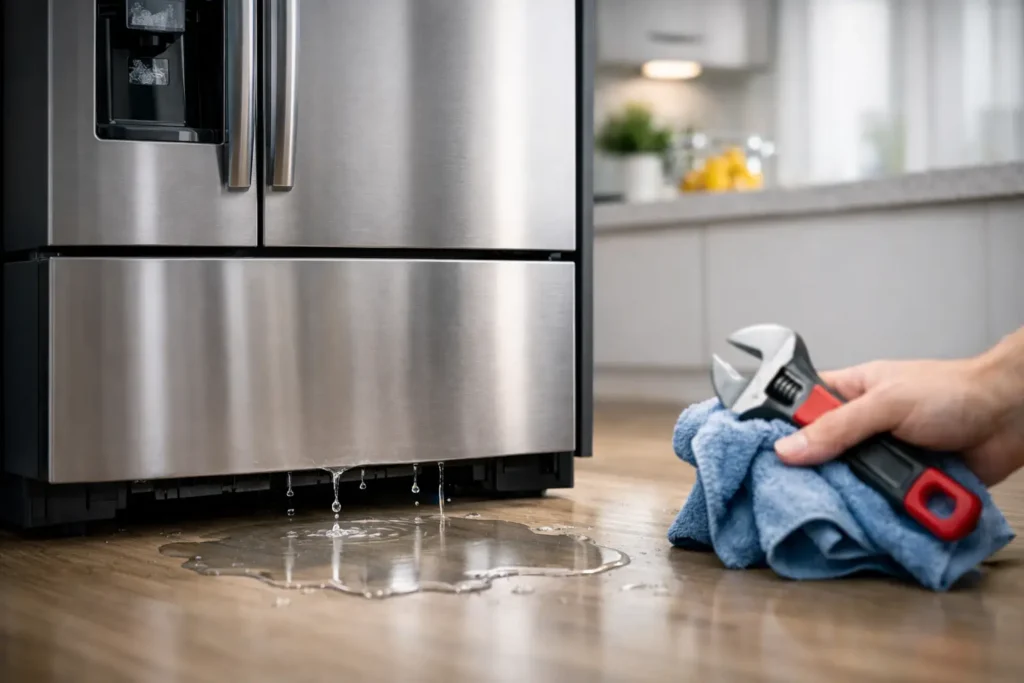
A puddle beside the refrigerator often looks minor at first. Then it reaches the cabinet toe-kick, seeps under flooring, or returns after every cleanup. A refrigerator water leak deserves prompt attention because the source is not always where the water appears. The good news is that many leaks come from a short list of common problems, and a few safe checks can help you narrow it down.
Before moving the refrigerator or removing panels, protect the floor and unplug the appliance if water is near an electrical connection. Dry the area thoroughly, then use towels or a shallow tray to see where fresh water first appears. That simple step can make the diagnosis much clearer.
First, Identify Where the Water Is Coming From
Water can collect under a refrigerator for very different reasons. A leak at the front may point to a clogged defrost drain. Water near the back often involves the ice maker supply line, water filter housing, or drain pan. Moisture inside the fresh-food compartment can be caused by a blocked drain, a damaged door gasket, or a door that is not closing properly.
Look for patterns. Does the puddle appear only after the ice maker fills? Does it show up after a defrost cycle? Is there frost or standing water under the crisper drawers? Those details help separate a plumbing leak from a drainage or condensation issue.
If the refrigerator is still cooling normally, do not assume the problem is harmless. A slow leak can damage vinyl, laminate, hardwood, subflooring, and nearby cabinets long before it becomes a large puddle.
Common Refrigerator Water Leak Causes
A clogged defrost drain
Most frost-free refrigerators melt frost from the evaporator during a defrost cycle. The meltwater is meant to run through a small drain opening and tube to a pan underneath the unit, where it evaporates. If the drain freezes or becomes blocked by food debris, ice, or residue, the water backs up.
A common sign is a sheet of ice on the freezer floor or water under the crisper drawers in the refrigerator section. Eventually, the water can run out onto the kitchen floor.
Some drain blockages can be cleared, but access and proper thawing methods vary by model. Forcing a sharp object into the drain can puncture a liner or damage a component behind it. If the drain repeatedly freezes after being cleared, there may be an underlying issue with the drain tube, drain heater, or refrigerator temperature control.
A loose or damaged water supply line
Refrigerators with a water dispenser or ice maker are connected to a household water line. The tubing and fittings are usually behind the appliance, so a slow drip can go unnoticed. Pull the refrigerator forward carefully and inspect the line for cracks, kinks, wet connections, or mineral buildup around fittings.
A line can leak after the refrigerator has been moved, especially if it was pushed back too tightly against the wall. Plastic tubing can become brittle over time, while compression fittings may loosen slightly. Do not overtighten a fitting in an attempt to stop a leak. A damaged fitting or cross-threaded connection can make the problem worse.
If water is actively dripping from the supply connection, turn off the refrigerator’s water shutoff valve until it can be repaired. You can still use the refrigerator for cooling, but the ice maker and dispenser will not have water.
A leaking water filter or filter housing
A water filter that is not fully seated can leak inside the refrigerator compartment or behind the grille. This often happens right after a filter change, but an older filter housing or O-ring can also fail without warning.
Check whether the filter is installed straight and locked into position. Remove and reinstall it according to the refrigerator’s instructions, then watch for moisture. If the leak continues with the filter properly installed, the filter head or housing may be cracked or worn. Replacing only the filter will not solve a damaged housing.
It is also worth checking the filter type. A filter that looks similar but is not the correct fit can cause poor sealing, reduced water flow, or a leak.
A cracked or overflowing drain pan
The drain pan sits near the compressor at the bottom of many refrigerators. Under normal operation, it collects defrost water and the warmth of the compressor helps it evaporate. A cracked pan, a pan that is out of position, or excessive water entering the pan can lead to water on the floor near the rear of the unit.
Not every model has a removable drain pan. Some are built into the refrigerator base, so pulling or bending parts unnecessarily can create another problem. If the pan is accessible, inspect it with a flashlight for obvious cracks and make sure it is seated correctly.
Door gasket problems and excess condensation
A refrigerator door gasket creates the seal that keeps warm, humid room air out. When the gasket is torn, dirty, warped, or not making full contact, moisture enters the compartment. That moisture can turn into condensation, water droplets, or frost, and may eventually drip onto shelves and the floor.
Check for food packages blocking the door, uneven shelves, or a refrigerator that is leaning forward. The doors should close and seal without being forced. Clean the gasket with mild soap and warm water, then dry it. If it is split, loose, or remains misshapen, replacement may be needed.
This issue is especially noticeable during humid weather or when the door is opened frequently. Still, a properly working refrigerator should manage normal kitchen humidity without producing puddles.
A leaking ice maker or dispenser component
Ice makers have a fill tube, inlet valve, mold, and water line connections. A cracked fill tube, frozen fill tube, or inlet valve that does not shut off completely can cause water to spill into the freezer or run down the back of the refrigerator.
You may notice oversized ice cubes, clumped ice, water under the ice bin, or an ice maker that keeps overflowing. Turning off the ice maker can help determine whether it is involved, but it does not identify the failed part. Water valves and ice maker components often need model-specific diagnosis to avoid replacing parts unnecessarily.
Safe Checks You Can Do Before Scheduling Service
Start by drying the floor and checking the most visible areas: the water filter, water line connection, ice maker area, and door gaskets. Then inspect inside the refrigerator under the crisper drawers and inside the freezer for ice or pooled water. Note when the leak returns and whether it happens while the dispenser or ice maker is in use.
Avoid tipping the refrigerator, removing sealed-system covers, or using heat guns to thaw internal ice. A hair dryer near plastic liners, electrical parts, or water is not a safe solution. Also avoid repeatedly resetting the appliance without finding the source. A leak may stop temporarily after ice melts, then return during the next defrost cycle.
If you need to pull the refrigerator out, get help with larger units. Use a piece of cardboard or appliance sliders to protect the floor, and leave enough slack in the water line and power cord. Check that the line is not pinched when the refrigerator is moved back into place.
When to Call for Refrigerator Leak Repair
Professional service is a sensible choice when the leak is active, recurring, hidden behind the appliance, or associated with ice buildup. It is also the safer route if the refrigerator is not cooling correctly, the water line is damaged, or you suspect a failed valve, filter housing, drain system, or ice maker part.
An accurate diagnosis matters because several issues can produce the same symptom. For example, water under the crisper drawers may be a clogged drain, but it can also be caused by warm air entering through a poor door seal. Replacing a part before confirming the cause can add cost without fixing the leak.
For homeowners, landlords, and property managers in Winnipeg, Steinbach, Blumenort, and nearby Manitoba communities, TrueFixPro can inspect the refrigerator, explain what is causing the leak, and review practical repair options before work begins. Parts should be selected for the specific model and the condition of the appliance, not guessed at based on a puddle alone.
A dry floor is not always proof that the problem is gone. Keep an eye on the area for the next day or two, especially after the ice maker cycles or the refrigerator goes through defrost. Catching a returning drip early is far easier than repairing water-damaged flooring later.