
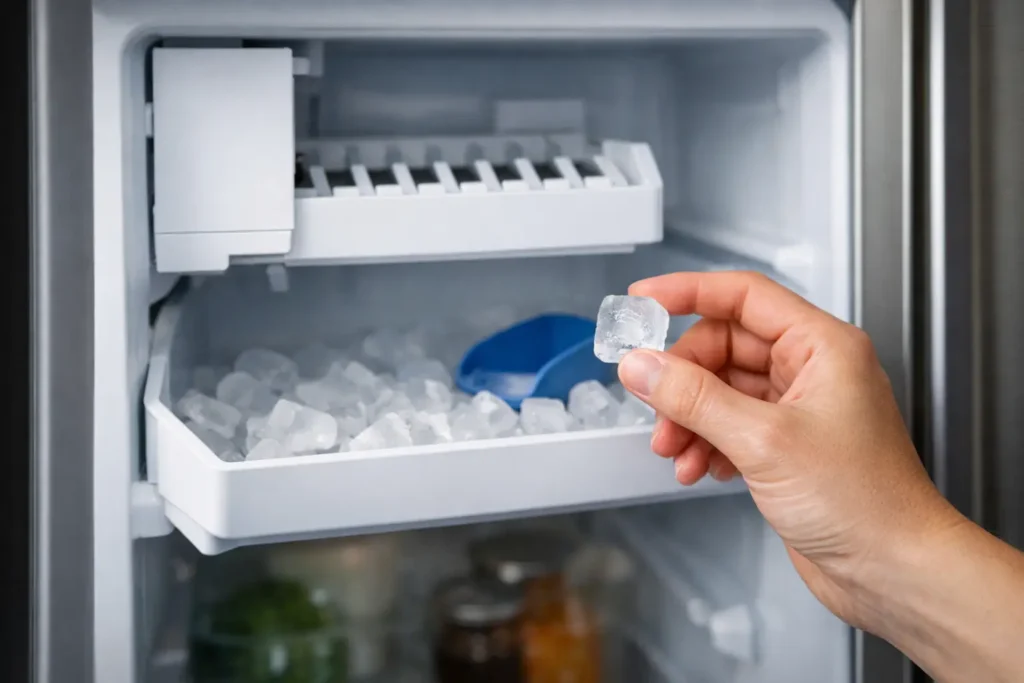
A full ice bin is easy to take for granted until it is empty when you need it. If you searched for “ice maker not working refrigerator,” the problem may be as simple as a shutoff arm or freezer temperature setting, but it can also point to a water supply, valve, sensor, or control issue. A few careful checks can help you understand what is happening without risking damage to the refrigerator or a water leak in your kitchen.
Start With the Simple Checks
Before assuming the ice maker has failed, give the refrigerator enough time and check the conditions it needs to make ice. Most ice makers do not produce a batch immediately after being turned back on or after a refrigerator has been moved. Depending on the model and freezer temperature, the first batch can take several hours.
Check these basics first:
- Make sure the ice maker is switched on and its wire shutoff arm is in the down position, if your model has one.
- Confirm the freezer is cold enough. A freezer should generally be near 0°F for dependable ice production.
- Look for a blocked, frozen, or kinked water supply line behind the refrigerator.
- Check whether the refrigerator’s water dispenser works, if it has one.
If the freezer is warmer than it should be, the ice maker may be only one symptom. Food that feels soft, frost buildup, unusual fan noise, or a refrigerator that runs constantly can indicate a cooling problem that needs to be diagnosed before replacing ice maker parts.
Why Is the Ice Maker Not Working in a Refrigerator?
Ice makers work through a straightforward cycle: the unit fills a mold with water, freezes it, releases the cubes, and refills for the next batch. When that cycle stops, the cause is usually tied to water flow, freezing temperature, a mechanical jam, or an electrical component.
The Water Supply Is Restricted
If the ice maker makes no ice at all, or produces very small, hollow, or cloudy cubes, restricted water flow is a common cause. A clogged refrigerator water filter can reduce flow enough that the ice maker does not fill properly. Filters should be replaced according to the refrigerator manufacturer’s schedule, particularly in homes with high mineral content in the water.
A pinched line behind the refrigerator, a partially closed shutoff valve, or a frozen fill tube can cause the same symptom. The fill tube is the small tube that delivers water into the ice mold. If it freezes, water cannot enter the tray. This often happens because of a dripping inlet valve or an ice maker that is not cycling correctly.
If the water dispenser also has weak flow or no flow, the issue is more likely in the incoming water supply, filter, valve, or door water system than in the ice maker itself.
The Ice Maker Is Jammed or Turned Off
Ice cubes can freeze together in the bin, especially when the freezer door is opened frequently or warm, humid air enters the compartment. A large clump of ice may prevent the shutoff arm from lowering or interfere with the dispenser mechanism. Empty the bin, break up loose clumps, and dry it before reinstalling it.
Do not chip at ice inside the ice maker with a knife, screwdriver, or other sharp tool. Plastic housings, coated evaporator surfaces, and water lines are easy to damage. A small puncture can turn a simple repair into a much larger problem.
Some models have a visible on/off switch, while others use a wire arm or electronic setting on the display. If the ice maker was turned off during cleaning, a move, or a vacation, restoring the setting may be all that is needed. Once activated, allow adequate time for a complete ice-making cycle.
The Freezer Temperature Is Too High
An ice maker cannot harvest cubes reliably if the mold does not freeze completely. A freezer that is set too warm, overloaded with food, or not circulating air properly may slow or stop ice production.
Start by checking the temperature setting and making sure packages are not blocking interior vents. A freezer packed tightly against the rear wall can restrict airflow. On the other hand, a nearly empty freezer can also fluctuate more than usual when the door is opened often.
If the freezer remains above 10°F, or if you notice thawing food, heavy frost, or inconsistent cooling, the refrigerator may have an issue with its evaporator fan, defrost system, door gasket, condenser, or sealed cooling system. In that situation, focusing only on the ice maker can miss the real source of the problem.
A Failed Water Inlet Valve or Fill Component
The water inlet valve opens briefly to send water to the ice maker. When it becomes weak, clogged, electrically faulty, or stuck, the mold may not fill correctly. You may hear no water entering at the end of a harvest cycle, or you may find empty molds when the ice maker should be producing cubes.
A valve that does not close fully can create a different issue: water slowly drips into the fill tube and freezes it shut. Replacing a valve without confirming the diagnosis is not always the right answer, because the control signal, water pressure, or ice maker assembly itself may be responsible.
This is where a proper diagnosis saves money. A technician can test the valve, inspect the fill tube, verify water flow, and check whether the ice maker is sending the correct signal before recommending parts.
The Ice Maker Assembly or Control Has Failed
Ice makers include moving parts, small heaters, sensors, switches, and electrical connections. Over time, a drive gear can wear out, a thermostat can fail, a sensor can stop reading correctly, or an internal heater may no longer release the cubes from the mold.
On newer refrigerators, the ice maker may communicate with a main electronic control board. On older models, a mechanical module may control the cycle. The repair approach depends heavily on the refrigerator’s make, model, age, and parts availability. In some cases, replacing one component is sensible. In others, replacing the complete ice maker assembly is more dependable and cost-effective.
When to Call for Refrigerator Ice Maker Repair
A homeowner can safely confirm settings, inspect the bin, replace a routine water filter, and check for a visibly kinked line. Beyond that, it is usually best to arrange service if the ice maker has stopped after those checks, the fill tube keeps freezing, the refrigerator is leaking, or the freezer temperature is unstable.
Call sooner if you see water on the floor, water collecting inside the freezer, or ice forming around the ice maker housing. Turning off the refrigerator’s water supply can help prevent further leaking while you wait for service. Avoid disconnecting water lines or attempting electrical tests unless you are familiar with the appliance and can safely disconnect power.
For landlords and property managers, an ice maker issue can be worth addressing promptly even when the refrigerator still cools. A slow valve leak or frozen line can become a more expensive water or cooling repair if it is left alone.
What a Professional Diagnosis Should Include
A good ice maker repair visit should begin with the symptom, not an assumption about the part. The technician should confirm freezer temperature, inspect airflow and frost patterns, check water supply and filter condition, examine the fill tube, and test the components related to the ice-making cycle.
At TrueFixPro, the goal is to explain what has failed, what repair options are available, and whether the repair makes sense for the appliance. Compatibility, part quality, availability, and your preferences all matter when selecting replacement parts. You should know what work is recommended before the repair moves forward.
Give the Refrigerator Time After a Repair or Reset
After a filter replacement, shutoff adjustment, power interruption, or repair, do not expect an instant bin of ice. Most units need several hours to make the first cubes, and a full bin can take a day or longer. Keep the freezer door closed as much as possible during that time and watch for normal-sized cubes rather than checking the bin every few minutes.
If the ice maker still does not produce after the freezer is cold and the water supply is confirmed, schedule a service visit. A clear diagnosis is usually the quickest way to get from an empty bin back to a refrigerator that works the way your household expects.