
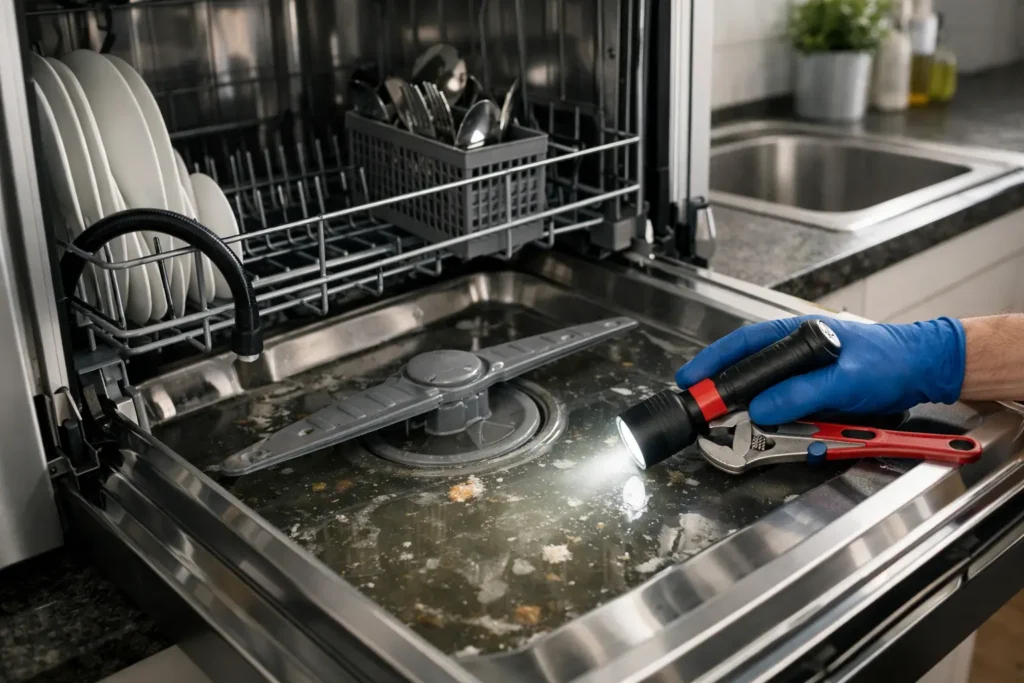
A dishwasher that finishes its cycle with cloudy water sitting in the bottom is more than an annoyance. Dishes may come out dirty, odors can develop quickly, and running another cycle usually makes the situation worse. If your dishwasher not draining problem is recent, a few careful checks may identify a simple blockage. If it keeps returning, the appliance may need a proper diagnosis before a small drainage issue turns into a leak or pump failure.
Start by Checking the Water in the Bottom
A small amount of clean water around the filter area can be normal in many dishwashers. Manufacturers leave a little water in the sump to help protect pump seals. What is not normal is a visible pool of dirty water across the bottom of the tub after the cycle ends.
Before touching anything, turn the dishwasher off. If there is a large amount of standing water, remove it with a cup, sponge, or shallow container so you can inspect the bottom safely. Avoid forcing the dishwasher through repeated cycles while it is full of water. That can cause an overflow if the drain system is fully blocked.
The timing of the problem also gives useful clues. Water left behind after every cycle often points to a restriction in the filter, drain hose, or plumbing connection. A dishwasher that drains sometimes but not always may have a weak drain pump, a partial blockage, or an electrical issue affecting the drain portion of the cycle.
Common Reasons a Dishwasher Is Not Draining
Dishwashers rely on a short chain of parts to move wastewater out of the tub: the filter and sump area, drain pump, drain hose, and the connection to your sink drain or garbage disposer. Trouble at any point can leave water behind.
A clogged filter or sump area
Food particles, broken glass, paper labels, bone fragments, and small utensils can collect below the lower rack. On many models, the filter twists out by hand, making it the first place worth checking. Rinse the filter under warm water and use a soft brush if grease or debris is packed into the mesh.
Look into the area beneath the filter with a flashlight. Do not reach into standing water blindly. Glass is a common surprise, and some dishwashers have sharp edges around the pump cover. If you can clearly see debris and remove it safely, that may restore drainage.
A blocked or kinked drain hose
The drain hose carries water from the dishwasher to the kitchen plumbing. It can become pinched behind the appliance, especially after flooring work, cabinet repairs, or moving the dishwasher. Grease buildup inside the hose can also slow drainage over time.
The hose should route upward beneath the counter before connecting to the sink plumbing or disposer. This high loop helps prevent sink water from flowing back into the dishwasher. A hose installed too low can cause dirty water to return to the tub, making it look like the dishwasher failed to drain.
A clogged sink drain or garbage disposer connection
If your kitchen sink is draining slowly, the dishwasher may not be the real source of the problem. Both appliances often share part of the same drain line. Run water in the sink and watch for slow drainage or backups before assuming the dishwasher pump has failed.
If a garbage disposer was recently installed or replaced, confirm that the dishwasher inlet knockout plug was removed. Leaving this plug in place blocks the dishwasher connection completely. This is a common issue after a new disposer installation, and it can look exactly like a dishwasher drain failure.
A faulty drain pump
The drain pump uses a small motor and impeller to push water out at the end of the wash cycle. A pump can fail electrically, wear out mechanically, or become jammed by debris. You may hear a humming sound without water moving, or there may be no drain-pump sound at all.
A weak or damaged pump is not always obvious from the outside. The dishwasher may drain partway, stop with an error code, or leave water only after heavier loads. Testing the pump properly may involve accessing components beneath the dishwasher and checking electrical readings, which is usually best handled by a qualified appliance technician.
A problem with the drain valve, wiring, or control
Some dishwasher designs use a drain valve or diverter system in addition to the pump. Others rely on the electronic control board to energize the pump at the correct time. Loose wiring, a failed relay, or a door-latch issue can interrupt the drain cycle even when the pump itself is still functional.
This is where guessing can get expensive. Replacing a pump without confirming the electrical supply or control issue may not solve the problem. A good repair starts with identifying why the dishwasher is not sending water out, not simply replacing the most common part.
Safe Checks You Can Try Before Booking Service
If there is no active leak and you are comfortable doing basic cleaning, these checks are reasonable for most homeowners:
- Clean the dishwasher filter and remove visible debris from the sump area.
- Check whether the kitchen sink drains normally and clear a simple sink-side blockage if needed.
- Inspect the accessible drain hose under the sink for kinks, crushing, or a loose connection.
- Run the dishwasher’s cancel or drain function after removing standing water, then listen for the pump.
Do not use chemical drain cleaner in a dishwasher. These products can damage seals, hoses, and internal components, while also creating a safety hazard for anyone who services the appliance afterward. Vinegar and baking soda are also not a reliable fix for a mechanical blockage, failed pump, or plumbing restriction.
If the dishwasher has a removable pump cover, follow the instructions in your model’s manual carefully. Always disconnect power before opening or reaching near internal components. Depending on the installation, that may mean unplugging the unit under the sink or turning off the correct breaker.
Signs You Should Stop and Call for Dishwasher Repair
Some drainage problems need professional attention right away. Water leaking onto the floor, a burning smell, repeated tripped breakers, or a dishwasher that makes a loud grinding noise should not be ignored. Turn off power to the dishwasher and shut off the water supply if you see an active leak.
It is also time to arrange service if the filter is clean, the sink drains normally, and water still remains after a drain command. Those symptoms often point to a blocked internal hose, damaged impeller, failing drain pump, or electrical problem. Pulling out a built-in dishwasher without the right tools can damage flooring, cabinetry, the water line, or the drain connection.
For landlords and property managers, a dishwasher that is not draining can become a larger problem quickly. Standing water can smell, encourage mold growth around seals, and leave tenants without a dependable kitchen appliance. Addressing the cause early is usually simpler than waiting until the appliance overflows or a drain connection starts leaking.
What a Proper Dishwasher Drain Diagnosis Includes
A technician should do more than confirm that water is sitting in the tub. A complete diagnosis considers the dishwasher’s drain cycle, pump operation, filter condition, hose routing, and connection to the household plumbing. On electronic models, it may also include checking for stored error codes and verifying whether the control is sending power to the drain pump.
The right repair depends on the findings. A lodged object may only require clearing the pump area. A split hose needs replacement, while a worn pump may call for a compatible new part. In some cases, the dishwasher itself is working correctly and the issue is in the sink drain or disposer connection. Clear explanations matter because the repair approach, cost, and responsible trade can differ.
TrueFixPro provides dishwasher diagnosis and repair for homeowners, landlords, and property managers in Winnipeg, Steinbach, Blumenort, and nearby Manitoba communities. Vitaly explains what is causing the issue, what repair options make sense, and whether replacing a part is worthwhile before work moves forward.
A dishwasher does not have to be completely dead to need attention. If it is leaving water behind, draining slowly, or making unusual noises at the end of a cycle, take the symptom seriously. A timely inspection can often prevent dirty water, unpleasant odors, and an avoidable kitchen-floor mess.