A refrigerator that suddenly feels warm, a washer full of water, or a dryer that runs without heating can throw off an entire household. When you need appliance repair Winnipeg homeowners can depend on, the goal is not just to get the appliance running again. It is to identify the real cause, understand the repair options, and make a sound decision for your home and budget.
Many appliance problems begin with a small change: a new noise, a longer cycle, a puddle near the machine, or food that is not staying cold. Paying attention early can sometimes prevent a larger failure, water damage, spoiled groceries, or an inconvenient breakdown at the worst possible time.
When an Appliance Problem Needs Professional Help
Some issues have a simple explanation. A tripped breaker, a loose plug, a closed water valve, or a clogged dryer lint screen can stop an appliance from working as expected. It is reasonable to check these basics first, as long as it can be done safely.
Other symptoms are a good reason to arrange service. Repeatedly resetting a breaker, smelling burning, seeing smoke, finding water on the floor, or hearing loud grinding or banging should not be ignored. Unplug the appliance or shut off its power if it is safe to do so, turn off the water supply for an active leak, and avoid using it until the problem has been assessed.
Modern appliances rely on several systems working together. A refrigerator may have a cooling, airflow, defrost, and control issue that produce similar symptoms. A washer that will not spin may have a drainage problem, an unbalanced load, a worn component, or an electrical fault. Replacing a part based on a guess can cost more than a proper diagnosis.
Common Appliance Repair Issues in Winnipeg Homes
Winnipeg households put major appliances through steady use, especially in busy family homes and rental properties. Knowing the common warning signs can help you describe the issue clearly when booking a repair.
Refrigerators and Freezers
A refrigerator that is not cooling properly deserves prompt attention. Check that the doors are closing fully, the temperature settings have not changed, and the vents inside are not blocked by food. If the fridge is still warm, the freezer is building heavy frost, or the compressor is clicking repeatedly, professional diagnosis is usually the next step.
Not every cooling issue means the appliance must be replaced. Problems with fans, defrost components, door seals, controls, and other serviceable parts can often be repaired. The age of the unit, its overall condition, part availability, and the cost of the repair all matter when deciding what makes sense.
Washers and Dryers
A washer that will not drain, spin, fill, or complete its cycle can leave you with wet laundry and a full schedule. Drainage restrictions, worn mechanical parts, lid or door lock issues, and control problems are all possible causes. Continuing to run a washer that is leaking or making severe noises can make the situation worse.
Dryers need attention when they stop heating, take multiple cycles to dry a load, make scraping sounds, or shut off unexpectedly. A clean lint screen is essential, but it does not replace proper vent maintenance. Restricted venting can reduce drying performance and create a fire risk. If the dryer is not heating or airflow seems weak, it is worth having both the appliance and venting situation considered.
Dishwashers, Ovens, and Stoves
A dishwasher that leaves dishes dirty may have a simple loading or detergent issue, but standing water, leaks, poor draining, or a unit that will not start often needs repair. Water leaks under a dishwasher can go unnoticed until flooring or cabinetry is affected, so it is best not to wait.
For ovens and stoves, uneven cooking, a burner that will not heat, an oven that will not reach temperature, or an error code can point to a failed heating element, sensor, switch, ignition component, or control issue. Gas appliances require particular care. If you smell gas, do not use switches, flames, or the appliance itself. Leave the area and follow the appropriate emergency safety procedures before arranging service.
Repair or Replace? Make the Decision With Real Information
There is no one rule that fits every appliance. A newer unit with a clearly identified, reasonably priced repair is often worth fixing. An older appliance with several failing systems, expensive parts, or repeated service history may be a better candidate for replacement.
A useful repair decision considers more than the appliance’s age. Think about its condition before the failure, whether the needed part is available, how much useful life may remain after repair, and whether a replacement would require changes to cabinetry, hookups, or delivery access. For landlords and property managers, dependable operation and turnaround time may also weigh heavily in the decision.
Honest service means explaining these trade-offs clearly. A technician should tell you what failed, what repair is recommended, and what the expected cost involves before moving forward whenever possible. No repair professional can make an aging appliance new again, but a quality repair can often provide practical, dependable service life.
What a Clear Appliance Repair Process Looks Like
The best service call starts with good information. When you contact a repair company, share the appliance type, brand and model number if available, the symptoms, when they started, and whether there has been a leak, unusual noise, or error code. A photo of the model tag or display code can also be helpful when communicating by text or email.
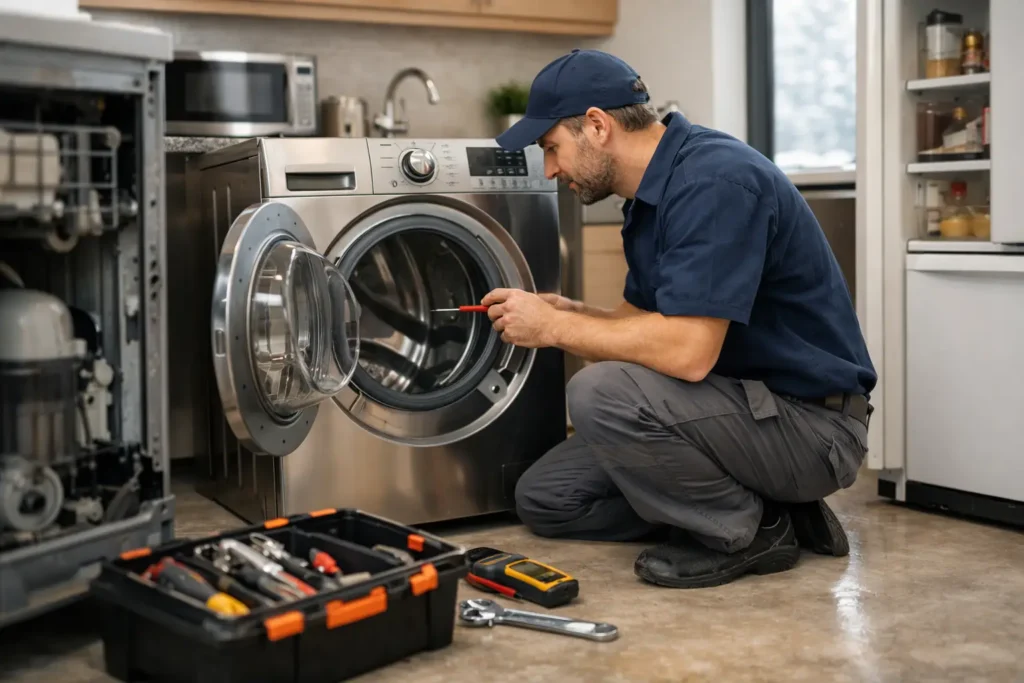
At the appointment, the technician should inspect the appliance, test the relevant systems, and narrow down the cause rather than relying only on the initial symptom. Some failures are obvious; others require testing because several components can produce the same result. Accurate diagnostics protect you from paying for unnecessary parts.
Once the issue is identified, you should receive a straightforward explanation of the available options. Part selection can depend on compatibility, quality, availability, and your preferences. In some cases, the repair can be completed during the visit. In others, the correct part must be ordered first. Clear communication about that difference matters, especially when the appliance is essential to your daily routine.
A careful technician also respects the home while working. That means protecting the work area when practical, handling appliances properly, checking operation after the repair, and leaving the area tidy. At TrueFixPro, Vitaly personally approaches each job with that owner-operator accountability, whether the call involves a refrigerator, washer, dishwasher, oven, central vacuum, or sump pump.
Do These Things Before Your Service Visit
A little preparation can make diagnosis faster and safer. Keep the area around the appliance accessible, remove dishes from a dishwasher if possible, and avoid running the appliance again if it is actively leaking, overheating, or making damaging noises. For refrigerators, move highly perishable food to a cooler or another refrigerator if cooling has failed.
Write down any error codes, note when the problem occurs, and mention recent events such as a power outage, a move, a new installation, or a change in performance. Do not take apart panels or attempt electrical repairs unless you are qualified to do so. Appliance parts can have sharp edges, stored electrical energy, hot surfaces, and water connections that are easy to damage.
Local Service for the Appliances Your Home Relies On
Homes in Winnipeg, Steinbach, Blumenort, and surrounding Manitoba communities depend on appliances every day. A working washer keeps laundry moving. A reliable refrigerator protects groceries. A properly operating sump pump can be especially important when water management cannot wait.
If an appliance is acting differently, trust the symptom rather than hoping it will correct itself. A timely diagnosis gives you useful answers, protects your home from avoidable damage, and lets you choose the repair path with confidence.