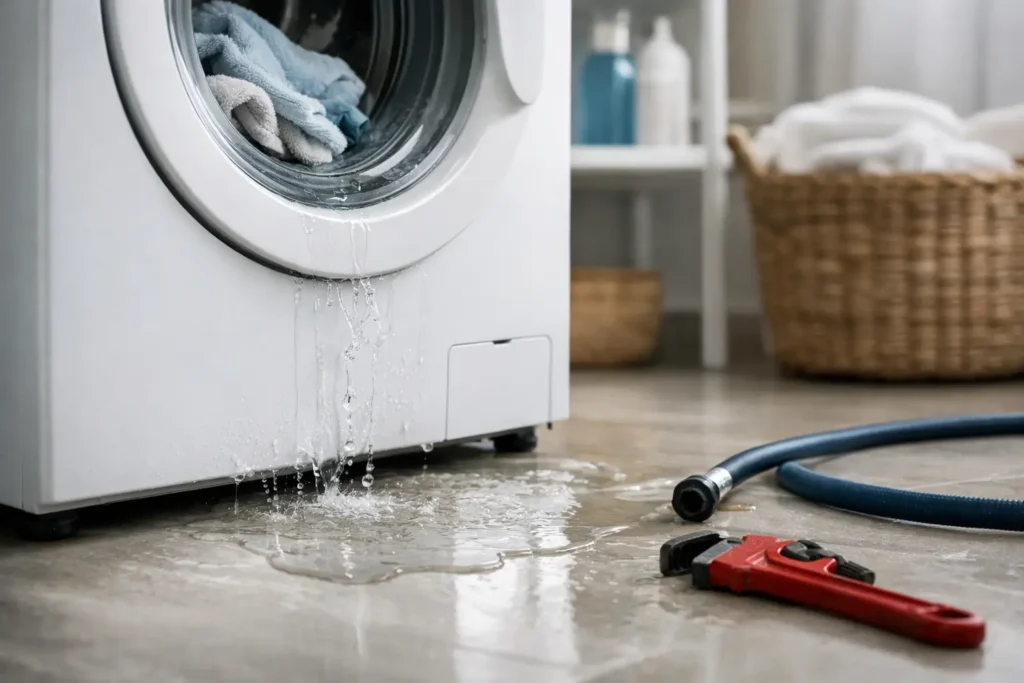
A washing machine leaking water is not a problem to put off until laundry day is over. Even a small puddle can soak flooring, damage a finished basement, reach nearby electrical connections, or create a bigger repair bill than the washer issue itself. The good news is that many leaks leave clues. Where the water appears, when it starts, and whether it happens on every cycle can narrow down the cause quickly.
Before looking for the source, turn off the washer, unplug it if the outlet and floor are dry, and shut off both water supply valves behind the machine. If water is still flowing or the area is unsafe to access, avoid moving the appliance until the supply is controlled. Towels and a shallow pan can help contain the water, but they do not solve the reason it leaked.
Start by Finding When the Washer Leaks
The timing of a leak matters. A washer that leaks while filling usually has a different issue than one that leaks only during draining or spinning.
If water appears as soon as the cycle starts, the inlet hoses, supply connections, detergent drawer, or internal water inlet valve may be involved. A leak that begins during agitation may point to an oversudsing problem, a damaged door seal on a front-load washer, or a tub-related issue. Water on the floor only when the machine drains often points toward the drain hose, standpipe, pump, or a loose hose connection underneath the washer.
It is also useful to look at the water itself. Clear water generally suggests a supply-side issue. Soapy or dirty wash water is more likely coming from the door, tub, drain system, or pump. Do not remove panels or tip a heavy washer alone just to investigate. Modern machines have sharp edges, electrical parts, and components that are difficult to reach safely.
Common Causes of a Washing Machine Leaking Water
Loose or worn water supply hoses
The hot and cold hoses behind the washer are one of the first places to check. A connection may have loosened over time, a rubber washer inside the hose fitting may be worn, or an older hose may be cracked or bulging. The leak may only happen when the washer is filling, which can make it easy to miss between loads.
Look for moisture around the faucet connections and where each hose attaches to the washer. A hose should be snug, but overtightening can damage threads or washers. If a hose is deteriorated, replacement is usually more sensible than trying to patch it.
A drain hose that has slipped, split, or backed up
During the drain portion of the cycle, the washer pump sends water through a large drain hose into a standpipe or laundry sink. If the hose has worked loose, has a split near a bend, or is pushed too deeply into the standpipe, water may spill onto the floor.
A drain backup can look similar. If the household drain cannot accept water as quickly as the washer pumps it out, water can rise and overflow from the standpipe. In that situation, the washer itself may be working correctly, but the plumbing drain needs attention. A repair technician can help identify whether the problem is at the washer connection or farther down the drain line.
Too much detergent or the wrong detergent
This is a common cause that surprises people, especially with high-efficiency washers. Using regular detergent in a high-efficiency machine, or simply using too much detergent, creates excess suds. The foam can push out through vents, the dispenser area, or the door seal and leave water on the floor.
More detergent does not mean cleaner laundry. Follow the detergent label and your washer’s manual, and use HE detergent when the machine requires it. If the washer has been oversudsing for several loads, run a cleaning or rinse cycle as directed by the manufacturer to clear residue.
A damaged front-load door gasket
Front-load washers rely on a flexible rubber door gasket, also called a boot seal, to keep water inside the drum. Small objects such as coins, bra wires, screws, pet hair, or clothing trapped in the seal can prevent the door from closing properly. Over time, the rubber can also tear, become distorted, or develop mold buildup that affects the seal.
With the machine off, inspect the visible folds of the gasket for debris and obvious damage. Wipe it clean with a soft cloth. If the gasket is torn or water leaks from the front of the door during washing, it usually needs professional replacement. Installing a door seal correctly often requires disassembling parts of the front of the washer.
A leaking detergent dispenser or inlet valve
Water that runs down the front or side of the washer during filling may come from the detergent dispenser. Dried detergent, fabric softener residue, or a clogged dispenser channel can cause water to overflow instead of flowing into the tub. Remove and rinse the dispenser if your model allows it, then clean away visible buildup.
The inlet valve, located where the supply hoses connect to the washer, can also leak internally or externally. A faulty valve may drip even when the washer is off, or it may send water where it should not go during the fill cycle. Because this repair involves water and electrical connections, accurate diagnosis matters before replacing parts.
A worn drain pump or internal hose
When water appears under the washer, especially during draining or spinning, a drain pump leak is a strong possibility. Pumps can crack, seals can wear out, and small items left in pockets can damage the pump or block it. Internal hoses and clamps can also loosen over years of vibration.
This is not a good repair to guess at. The same symptom can come from several components underneath the cabinet. A technician can run the machine through the appropriate cycle, inspect the pump and hoses, and identify the actual source before recommending a repair.
An unlevel washer or overloaded load
A washer that rocks, shakes heavily, or moves across the floor can put stress on hoses, seals, and internal connections. An uneven machine may also allow water to escape from areas designed to stay level. Check that all four feet are firmly on the floor and that the washer does not wobble when pressed at the corners.
Overloading can make the problem worse, particularly with large blankets, comforters, or rugs that hold a lot of water. These items need room to move and balance. If a leak occurs only with bulky loads, use a smaller load or follow the machine manufacturer’s guidance for washing oversized items.
What You Can Check Safely Before Calling for Repair
After the water is shut off, check the visible supply hoses, drain hose, door gasket, and detergent dispenser. Note whether the leak occurs during filling, washing, draining, or after the cycle is finished. Taking a photo of the puddle location and any visible drip can be helpful, especially if the machine has stopped leaking by the time service is scheduled.
Avoid repeatedly running the washer to test it. One controlled observation is useful; several more leaking cycles can damage flooring and baseboards. Do not use tape, sealant, or temporary hose patches on pressurized water connections. They can fail without warning.
When Professional Washer Service Is the Better Choice
Call for service if the leak is coming from beneath the washer, if a door gasket is damaged, if the pump may be leaking, or if the machine leaks despite secure hoses and proper detergent use. Service is also a good idea when the washer displays an error code, will not drain, makes unusual noises, or has begun leaking after a move or installation.
For homeowners, landlords, and property managers, a proper diagnosis can prevent buying a part that does not solve the problem. At TrueFixPro, Vitaly checks the leak source, explains what has failed, and discusses practical repair options before work begins. Parts should fit the specific washer model and make sense for the condition and age of the appliance.
A leaking washer does not always mean it is time to replace the machine. A hose, clamp, dispenser issue, pump, or seal may be repairable. On the other hand, if an older washer has multiple major problems, it is reasonable to compare repair costs with replacement. The right decision depends on the confirmed fault, the machine’s overall condition, and how dependable it has been.
Protect the floor first, then focus on the clues the leak provides. A clear description of when and where the water appears gives a repair professional a better starting point and helps get your laundry routine back on track with less disruption.