
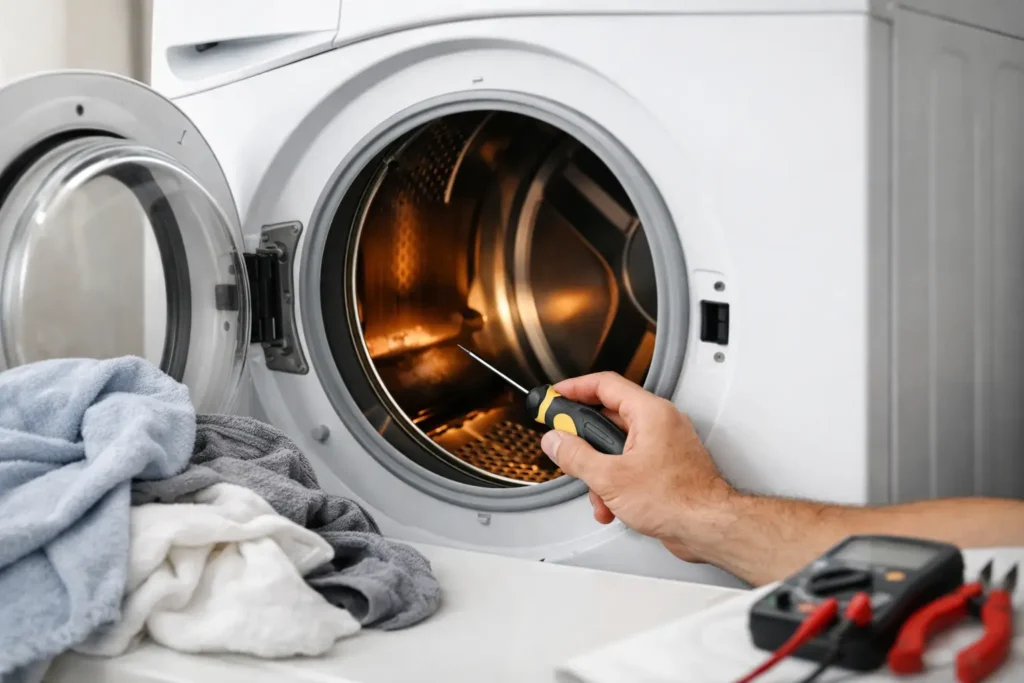
A load that tumbles for an hour but comes out cold and damp is more than an inconvenience. When a dryer not heating problem stops laundry day, the cause may be as simple as a tripped breaker or restricted venting, but it can also point to a failed heating component that needs professional testing.
Before replacing the appliance or ordering parts, take a few safe checks. A clear diagnosis matters because several dryer problems can create the same symptom, and the right repair depends on whether the drum is turning, the unit has proper power, and air is moving outside as it should.
Start with the safe, simple checks
First, confirm the dryer is set to a heat cycle. Air Fluff, Air Dry, and some cool-down portions of a cycle do not use heat. Try a timed dry cycle on high heat with a few damp towels. If the dryer is still cool after several minutes, there is likely a heating or power issue.
Next, clean the lint screen and check the exterior vent hood while the dryer is running. The flap should open and you should feel a steady flow of warm air on a working dryer. Weak airflow, no airflow, or a vent flap blocked by lint, snow, or debris can cause long drying times and may trigger a safety device inside the dryer.
If your electric dryer tumbles but does not heat, check the electrical panel. Most electric dryers use a 240-volt circuit with two breakers. In some cases, one side of the circuit trips while the other side still supplies enough power to turn the drum and operate the controls. Turn the dryer breakers fully off, then back on. If a breaker trips again, do not keep resetting it. Have the electrical supply and appliance checked.
For a gas dryer, make sure the gas shutoff valve is open and that there is no smell of gas. If you smell gas, leave the area, avoid switches and open flames, and contact your gas utility or qualified professional right away. Do not attempt to investigate a suspected gas leak yourself.
Why a dryer is not heating even though it runs
A dryer has separate systems for tumbling, heating, airflow, and control. That is why a dryer can appear to run normally while producing no heat. The most common causes depend on the dryer type and the condition of its venting.
Restricted venting or lint buildup
A blocked dryer vent is one of the first things to rule out. Lint can collect in the transition duct behind the dryer, in long vent runs through walls, and at the exterior hood. Bird nests, crushed flexible ducts, and heavy lint buildup are also common causes of poor airflow.
Restricted airflow does not always make a dryer completely cold at first. More often, clothes take two or three cycles to dry, the dryer cabinet feels unusually hot, or the machine shuts off before the load is dry. Over time, overheating can open a thermal fuse or damage other components.
Cleaning the lint screen after every load helps, but it does not replace proper vent cleaning. If the vent run is long, has several turns, or has not been cleaned in years, professional vent service may be worthwhile before repairing internal parts.
A tripped breaker or incomplete power supply
This issue is specific to many electric dryers. The motor and drum can run on 120 volts, while the heating element requires the full 240 volts. A partially tripped breaker can make it look like the dryer is working when it is not receiving enough power to heat.
A technician can verify voltage at the outlet and terminal block safely. This test is especially useful when the dryer is newly installed, has recently been moved, or continues to have heating trouble after a breaker reset.
Failed heating element
Electric dryers use a heating element that glows hot as air passes over it. Like any electrical component, the element can burn out after years of use. It may also fail if poor airflow causes the dryer to overheat repeatedly.
A burned-out element cannot be confirmed by appearance alone in every case. Proper diagnosis involves disconnecting power and testing the component with a meter. Installing a new element without addressing the airflow problem can lead to the same failure again.
Blown thermal fuse or high-limit thermostat
Dryers have safety devices designed to stop heat when temperatures become unsafe. A thermal fuse may open permanently after overheating. A high-limit thermostat can also fail or cycle incorrectly. These parts are relatively small, but they should not be replaced as a guess.
If a thermal fuse has blown, there is usually a reason. A clogged vent, blocked blower housing, or damaged duct may have caused the overheating. Finding and correcting that underlying problem is part of a reliable repair.
Gas dryer ignition problems
A gas dryer needs several parts to work together: an igniter, gas valve coils, flame sensor, and a functioning gas supply. A failed igniter or weak gas valve coils can allow the drum to turn without producing heat.
Some gas dryers heat briefly at the start of a cycle and then go cold. That pattern can point to failing gas valve coils, but testing is still needed. Gas appliance repairs should be handled carefully, with the appliance unplugged and gas supply managed correctly.
Faulty moisture sensor, timer, or control board
Not every heating issue comes from the heater itself. On sensor dry cycles, dirty moisture sensor bars can make a dryer end a cycle too early. Wiping the sensor bars inside the drum with a soft cloth and mild cleaner can help if clothes are still damp but the dryer does produce heat.
Timers, relays, wiring, and electronic control boards can also prevent power from reaching the heating system. These failures are less common than venting or heating-element problems, but they are possible. They require electrical testing rather than trial-and-error parts replacement.
When to stop using the dryer
Stop using the dryer and arrange service if it smells like burning, trips breakers, makes unusual buzzing sounds, gets excessively hot, or has visible scorching near the plug or outlet. These symptoms can indicate an electrical issue or overheating condition that should not be ignored.
You should also stop using the dryer if the venting is disconnected, crushed, or visibly packed with lint. Running a dryer without proper exhaust can release moisture and lint into the home, increase fire risk, and damage the appliance over time.
If the dryer simply runs cold with no other warning signs, it is still best to avoid repeated test cycles. Continually running a dryer that cannot heat wastes energy and can add wear to the motor, belt, and drum rollers.
What a professional dryer diagnosis should include
A good dryer repair starts with more than replacing the most likely part. The technician should confirm the correct power supply or gas supply, inspect airflow, check the heating circuit, and test the relevant thermostats, fuses, sensors, and controls.
The repair decision also depends on the dryer’s age, condition, and the availability of compatible parts. In many cases, replacing a heating element, thermal fuse, igniter, or gas valve coils is a practical repair. If multiple major parts have failed on an older appliance, it may make more sense to discuss the cost of repair compared with replacement.
For homeowners, landlords, and property managers in Winnipeg, Steinbach, Blumenort, and nearby Manitoba communities, TrueFixPro provides in-home dryer diagnostics with clear explanations of the problem and available repair options. The goal is straightforward: identify why the dryer is not heating, repair it properly when it makes sense, and avoid unnecessary parts or surprises.
A cold dryer does not always mean a costly repair. Start with the cycle setting, lint screen, vent outlet, and breaker, then let accurate testing guide the next step. That approach protects your appliance, your laundry routine, and your home.