
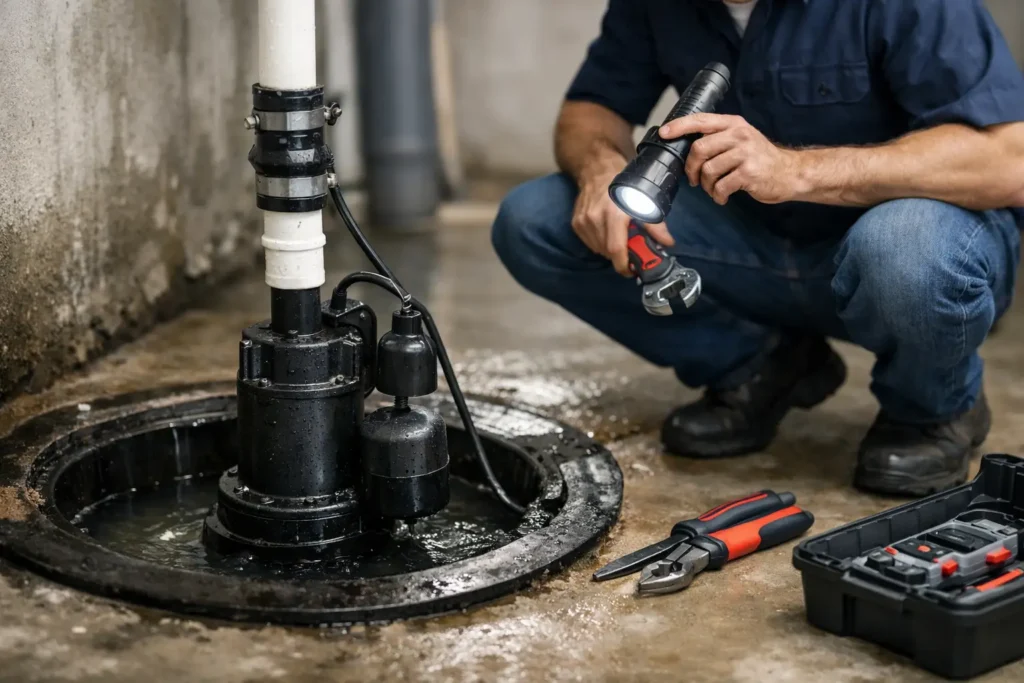
A sump pump often sits quietly in a basement corner until heavy rain, fast snowmelt, or a plumbing leak puts it to work. That is exactly why sump pump repair should not wait until water is already rising across the floor. If the pump runs strangely, fails to switch on, or leaves water in the pit, a timely inspection can help prevent a small mechanical issue from becoming a costly cleanup.
For homeowners, landlords, and property managers in Winnipeg, Steinbach, Blumenort, and nearby Manitoba communities, a working sump pump is a practical part of protecting a home. The goal is not to replace parts blindly. It is to find out why the system is not moving water properly, explain the repair options clearly, and make a sound decision based on the pump’s condition.
Signs You May Need Sump Pump Repair
The most obvious warning sign is water where it should not be. If the sump pit is full but the pump is not running, or the pump runs but the water level barely drops, the system needs attention. Basement moisture, a damp smell, or water marks near the pit can also point to a pump that is not keeping up.
Some problems are less obvious. A pump that turns on and off every few seconds may have a float switch issue, a check valve problem, or a discharge line that allows water to flow back into the pit. A loud rattling, grinding, or humming sound can indicate a jammed impeller, worn motor, loose component, or debris inside the basin.
Watch for these common symptoms:
- The pump does not start when the pit fills with water.
- The pump runs continuously, even after the water level drops.
- Water returns to the pit after the pump shuts off.
- The pump trips a breaker or loses power unexpectedly.
- The discharge line is leaking, frozen, blocked, or sending water too close to the foundation.
A sump pump can also fail simply because it has reached the end of its service life. The right answer depends on the pump’s age, the type of failure, the availability of compatible parts, and whether repair will provide dependable service when the next storm arrives.
Safe Checks to Make Before Calling for Service
A few basic checks can rule out simple problems. Start by looking at the power connection. Confirm that the pump is plugged directly into a working outlet and that the breaker has not tripped. Avoid using an extension cord as a permanent setup, especially in a damp basement. The pump needs a reliable power source, and improper wiring can create a safety risk.
Next, look into the sump pit with a flashlight. Do not reach into the water or touch the pump if there is any concern about electrical safety. Check whether the float is visibly stuck against the pit wall, tangled around the pump, or blocked by debris. The float is the part that tells the pump when to start. If it cannot move freely, the pump may not turn on when needed.
You can also inspect the discharge pipe where it exits the house. In Manitoba, frozen or obstructed discharge lines are a common concern during changing weather. If water cannot leave through the line, it may back up into the pit, overwork the pump, or leave the system unable to discharge water at all. Make sure the outdoor outlet is not buried under ice, blocked by soil, or directed back toward the foundation.
If the pump is connected to a ground fault circuit interrupter outlet, check whether the outlet has tripped. Reset it once if appropriate, but do not keep resetting a breaker or outlet that trips again. Repeated tripping can indicate a motor problem, a damaged cord, moisture in an electrical connection, or another issue that requires professional diagnosis.
Why a Pump May Run but Still Not Protect the Basement
Hearing the motor run can be reassuring, but it does not always mean the pump is doing its job. A pump may run without moving water if the impeller is damaged or clogged. The impeller is the internal component that pushes water through the discharge pipe. Sediment, small stones, or debris can interfere with its operation over time.
A failed check valve is another common cause of trouble. This valve is installed on the discharge pipe and is meant to keep pumped water from falling back into the basin after each cycle. When it is installed backward, worn out, or stuck open, water can return to the pit. The pump then cycles more often than it should, adding unnecessary wear to the motor.
Pipe issues matter just as much as pump issues. A cracked fitting, loose connection, blocked line, or frozen outdoor discharge can stop the system from moving water away from the home. In some cases, the pump itself is fine, but the discharge setup needs correction. That is why an accurate diagnosis looks at the full system, not just the motor.
Repair or Replacement: How to Make the Right Call
Repair is often a sensible option when the pump is relatively new and the issue is limited to a switch, check valve, discharge connection, or accessible mechanical component. A proper repair can restore dependable operation without replacing equipment that still has useful life left.
Replacement may be the better value when the motor has failed, the housing is cracked, the pump has a history of repeated problems, or the unit is older and heavily worn. It can also make sense to replace an undersized pump that has struggled during previous wet seasons. Installing a more suitable unit may reduce cycling and provide better protection, but bigger is not automatically better. An oversized pump can cycle too quickly and may wear prematurely if the system is not matched to the home’s needs.
The best replacement choice depends on the size and depth of the pit, the amount of water the home typically receives, the vertical lift to the discharge point, and the condition of the existing piping. Quality and part availability also matter. A compatible pump that can be serviced and supported is usually a better long-term choice than a unit selected only because it is the cheapest option on the shelf.
Consider a Backup Pump Before the Next Outage
A standard sump pump relies on household power. During a storm, that can be the same power source most likely to fail. A battery backup pump adds another layer of protection by operating when the primary pump cannot run because of a power outage or because the main pump has failed.
A backup system is especially worth considering for finished basements, homes with stored valuables below grade, rental properties, or houses that have experienced water problems before. It is not a substitute for maintaining the primary system. The backup battery, charger, alarm, float, and discharge arrangement all need to be checked as part of regular service.
Some homeowners also benefit from a high-water alarm. This does not pump water, but it provides an early warning when the pit level rises beyond a normal range. That notice can be valuable when a problem starts while you are asleep, away at work, or out of town.
What Professional Sump Pump Service Should Include
A useful service visit starts with listening to the symptoms. Did the pump stop after a storm? Is it making noise? Did a breaker trip? Has the basement taken on water before? These details help narrow down the problem, but the equipment still needs to be tested and inspected.
A thorough diagnosis may include checking power to the pump, testing float operation, examining the basin for debris, assessing the discharge line and check valve, and verifying that the pump can move water effectively. If repair is practical, the work and expected cost should be explained before proceeding. If replacement is the more dependable option, the reasons should be clear, along with suitable equipment choices.
TrueFixPro approaches sump pump work the same way it handles appliance repairs: with careful diagnosis, straightforward communication, and respect for the customer’s home. The aim is to help you understand what failed, what can be repaired, and what solution makes the most sense for your property.
Keep the System Ready Between Service Visits
Testing a sump pump periodically is a simple habit that can uncover problems before the wet season. With the pump plugged in and the area safe, slowly pour water into the pit until the float activates. The pump should start, lower the water level, and shut off after the water is discharged. Then check outside to confirm water is moving away from the foundation.
Keep the pit cover in place when possible, and do not allow loose debris to collect in the basin. Inspect the outdoor discharge area before spring thaw and after major storms. If you notice irregular cycling, unusual sounds, or poor drainage, arrange service before the pump is needed in an emergency.
A sump pump does not need attention every day, but it does need to work on the day it matters. Addressing warning signs early gives you more repair options, more time to plan, and a better chance of keeping the basement dry.